
GREEN COVE SPRINGS—For almost a year, amateur archaeologist and former U.S. history teacher Steve Griffith has been enamored by a piece of land hidden in the woody green acres of County Road 209. …
This item is available in full to subscribers.
To continue reading, you will need to either log in to your subscriber account, below, or purchase a new subscription.
Please log in to continueDon't have an ID?Print subscribersIf you're a print subscriber, but do not yet have an online account, click here to create one. Non-subscribersClick here to see your options for subscribing. Single day passYou also have the option of purchasing 24 hours of access, for $1.00. Click here to purchase a single day pass. |



GREEN COVE SPRINGS—For almost a year, amateur archaeologist and former U.S. history teacher Steve Griffith has been enamored by a piece of land hidden in the woody green acres of County Road 209.
Although quiet, overgrown and somewhat abandoned, the pieces of history that lie there are as loud as ever.
Griffith, president of the Clay County Historical Society, has been a primary counterpart in revitalizing the land into what was once Pleasant Point Cemetery.
As a Black burial ground, it’s the final resting place of some of the county’s significant figures.
“Black graveyards are sometimes very overlooked,” Griffith said. “And there’s not many in the South left.”
With little record of the cemetery on file, little is known about its history and who is buried on the sacred property—until now.
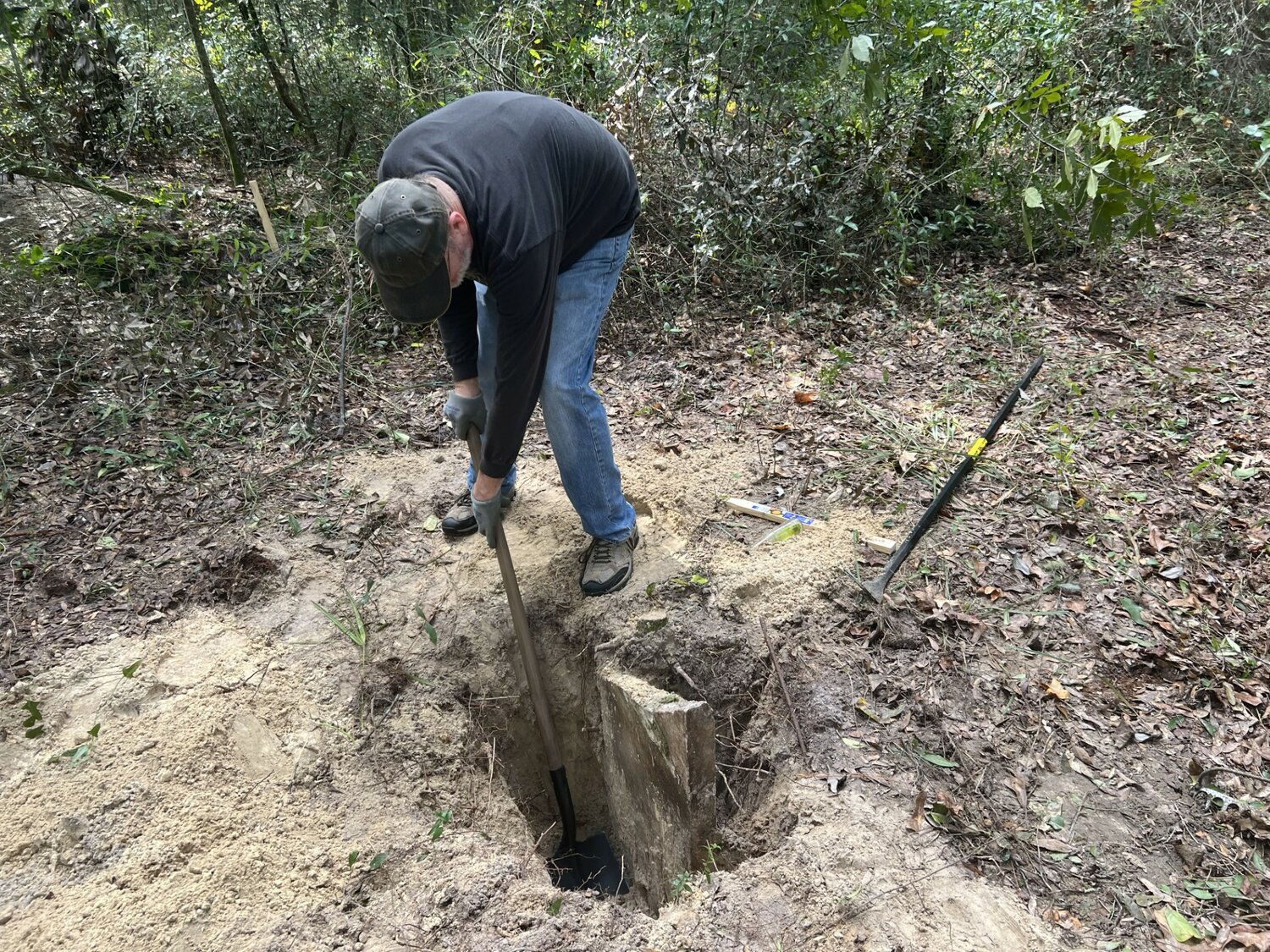
Griffith and volunteer Megan Coppage have been visiting the woody land for about two months to sift through and clean up what’s left. In snipping down vines and digging up dirt, they discovered many depressions, a possible mausoleum and the gravestone remnants, some sunken, of 23 individuals buried in the cemetery. And they said there is likely to be plenty more.
“Judging by how big the family plots are, judging by how big the cemetery is and the number of depressions in the ground, we think there is a minimum of 40 to 60 people in there,” Coppage said. “And that’s a rough minimum.”
U.S. Navy Veteran George Elias Forrester, along with some of his family members, is buried at Pleasant Point. He served with the Union in the Civil War. The son of Cyrus and Dorcas Forrester, his family was the first free Black family in the county.
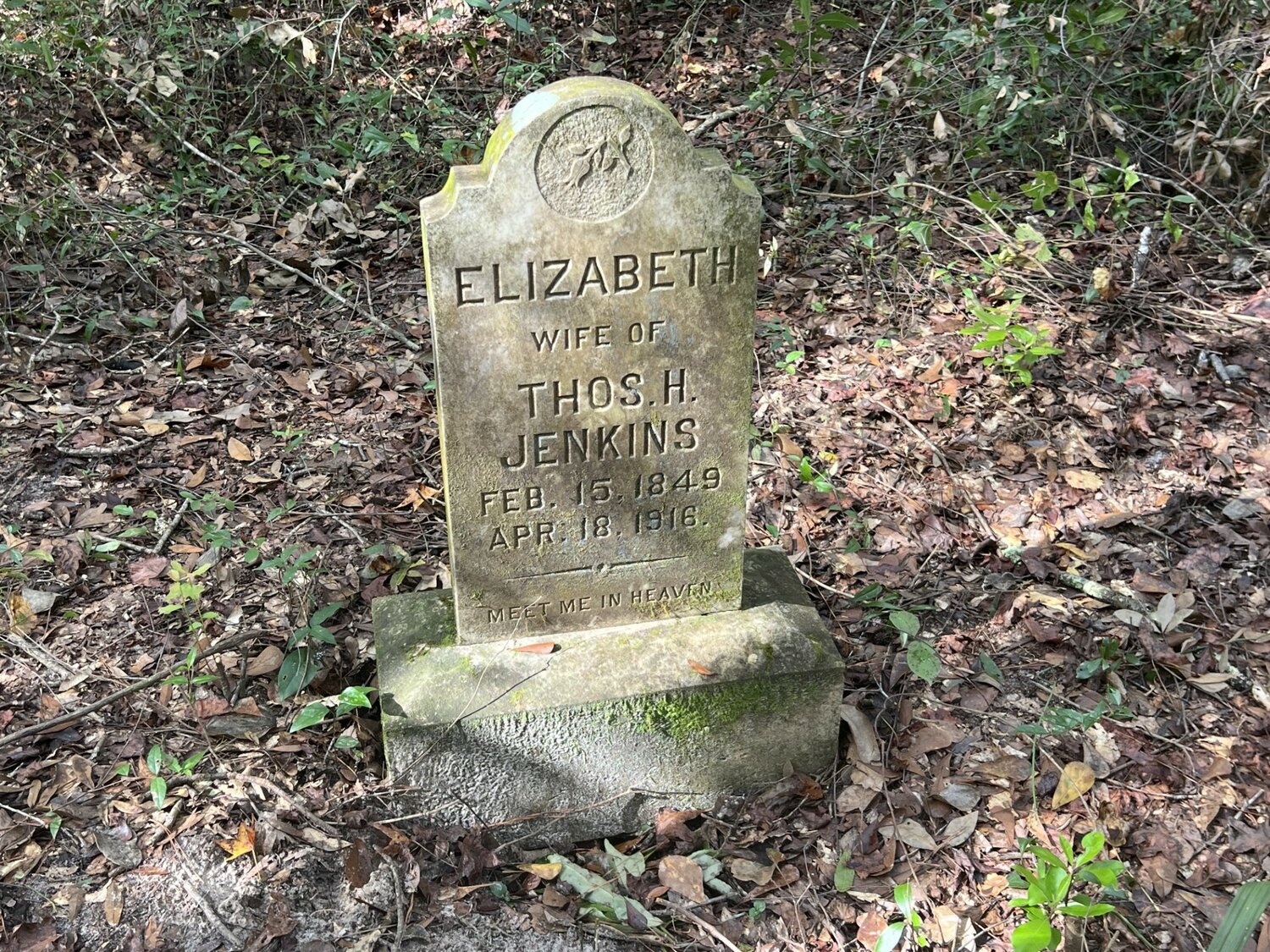
Elizabeth Lewis-Jenkins, the wife of Thomas H. Jenkins, is also buried there. Thomas was one of the trustees and founders of the historic Mount Zion A.M.E Church in Green Cove.
Not too far from them also lies Pizel and Mary Ambrose Robinson, who they believe are the great-grandparents of R&B singer Patti LaBelle.
Although almost completely desolated, a poignant entranceway remains standing, and an intact crypt and headstones rest, which Griffith said is evidence that the land was once a beautiful, maintained space.
“Supposedly, there was a loop that people could just go in and drive around the graveyard,” he said.
He said these discoveries give a breath of life to a place that has suffered much vandalism over the years.
The land was first given to Thomas Travers as a Spanish land grant in the 1830s. A county map shows that his heirs owned it in 1880.
Researchers have found that in 1956 the land was given to Clay County native Joseph Johnson, who acted as its caretaker. He was deeded the property from Mercer G. and Martha Conway. Johnson’s family is also buried there.
Coppage said the cemetery is listed on the Florida Master Site File, which records the state’s historical and cultural sites. She said it is also in the Florida Public Archaeology Network.
However, until recently, the cemetery was not recorded on Find a Grave, which hosts a collection of memorials and death certificates for more than 250 million gravesites. The two have been collaborating with Kathy Kass, who has 30 years of experience in genealogy, to update Find a Grave and correctly identify each individual they uncover.
Kass said she has created 26 memorials on the site so far, but several have been misplaced.
Coppage said this is because there has been much confusion surrounding the exact naming of the cemetery, which has gone by Woodlawn Cemetery, Magnolia Springs Colored Cemetery, Two Bridges and Pleasant Point. They also found that some death certificates do not list specific burial locations.
As a result, many databases claim local Blacks are buried somewhere where they probably aren’t, including Magnolia Springs Cemetery in Green Cove. Which leads the group to believe they could be located at Pleasant Point.
Clay County Historical Society board member Cheryl Gonzalez has researched the cemetery for two years. She has been tasked with piecing the identified names together like a puzzle, filling in the gaps in local family trees.
As a member of Mount Zion A.M.E, she said it brought her to tears when she discovered Elizabeth was buried at Pleasant Point. She’s glad to be a part of the process.
For the future, the group plans to keep cleaning and researching. Griffith and Coppage said they hope to get more people involved in the venture to continue connecting the dots to the historical "time machine." The cemetery is now registered with the Black Cemetery Network, which aims to save and monitor Black graveyards.
Griffith said the network may help if enough noise is made.
Additionally, he said that once they clean the cemetery up, a state archaeologist will be available to bring equipment for remote sensing radar. This would be a huge leap in the right direction.
All in all, they said they want to give people a chance to view their loved ones, whether known or not, and for the individuals buried there to rest in peace.
“It’s like a slice of our county's history,” Coppage said. “You’ve got freed slaves buried out there. You have war veterans buried out there. And these people deserve a nice and respectful final resting place.”
