
CLAY COUNTY – American alligators are unique and fascinating animals. They are native to the southeastern United States and found in only 10 states. Alligators are designated as the official state …
This item is available in full to subscribers.
To continue reading, you will need to either log in to your subscriber account, below, or purchase a new subscription.
Please log in to continueDon't have an ID?Print subscribersIf you're a print subscriber, but do not yet have an online account, click here to create one. Non-subscribersClick here to see your options for subscribing. Single day passYou also have the option of purchasing 24 hours of access, for $1.00. Click here to purchase a single day pass. |
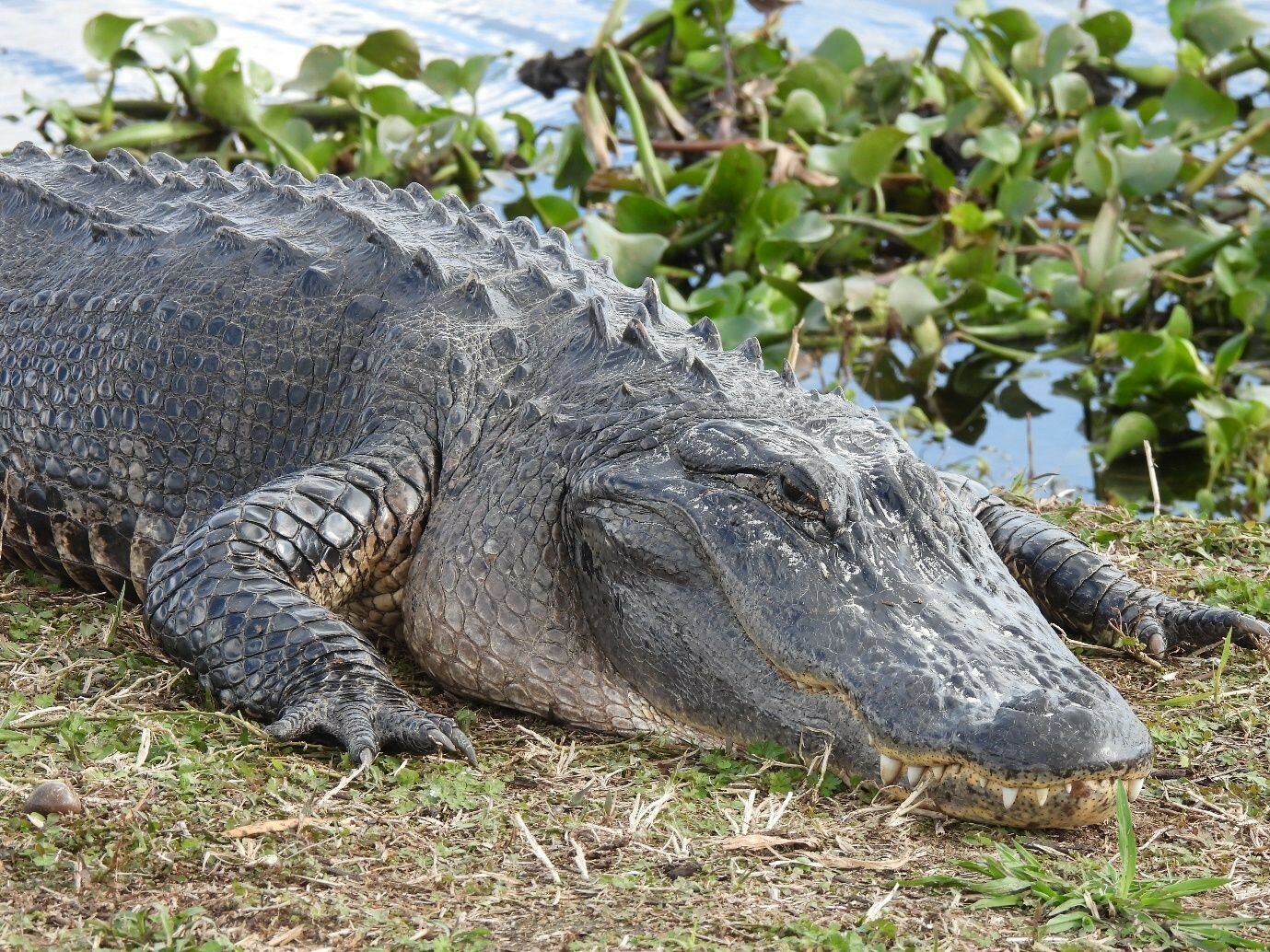


CLAY COUNTY – American alligators are unique and fascinating animals. They are native to the southeastern United States and found in only 10 states. Alligators are designated as the official state reptiles of Florida, Mississippi and Louisiana. Although once they were listed as an endangered species due to population declines resulting from uncontrolled hunting for the skin trade, conservation efforts have helped alligator numbers rebound. In Florida, there are an estimated 1.3 million alligators of all sizes.
As one of the largest reptiles in North America, alligators are situated at the top of the food chain. In general, alligators do not pose a threat to people. However, alligators can pose potential dangers to people in some situations. In this publication, we present some facts about alligators, describe their potential threats to people and pets, and provide suggestions on how to cope with these risks. Our target audience includes anyone living in or visiting the geographic range of American alligators.
Getting to know alligators
• The American alligator can be found from southeastern Oklahoma and Texas in the West to North Carolina and Florida in the East. They live in all 67 of Florida's counties, especially Clay.
• Alligators live mostly in inland freshwater but also use brackish (slightly salty) water like the St. Johns River. They can be found in almost any wetland, such as swamps, marshes, ponds, lakes, rivers and canals.
• As predators, alligators are an important part of wetland ecosystems.
• They are opportunistic feeders, consuming fish, birds, turtles, crabs, crayfish, snails, small mammals, snakes, carrion (dead animals) and even other alligators.
• Alligators excavate and maintain “alligator holes” on the bottoms of shallow wetlands. Alligator holes retain water and become essential to many other fish and wildlife during droughts.
• Alligators are one of the largest animals on the continent, with males growing to a larger maximum length and weight than females.
• Potentially weighing more than 1,000 pounds, males rarely reach more than 14 feet, with most not growing beyond 11–12 feet. The range-wide confirmed records are 14 feet, 9.25 inches for Alabama and 14 feet, 3.5 inches for Florida; females can grow to 10-feet-long and 250 pounds but are typically 7-to-9 feet when full-grown. Alligators become sexually mature when they reach 6-to-7 feet. Alligators in Florida take 9-to-14 years to grow to sexual maturity.
• Females build nests of mounded vegetation, peat, sticks, leaves, and/or mud, laying 30-to-45 eggs during June and July. A female alligator nests only once a year. Eggs hatch in August and September, after 63-to-70 days of incubation.
• Typically, 25%-to-50% of alligator nests are destroyed by predators, usually raccoons. In wet years, low-lying nests are lost to flooding. Overall, only 40%-to-50% of alligator nests survive hatching. In nests that survive, about 70% of eggs successfully hatch.
• Young alligators are eaten by predators such as raccoons, otters, wading birds, fish and larger alligators. Leading causes of natural death of adults are cannibalism (alligators eating alligators), injuries from intraspecific fighting, and stress during droughts.
• Wild alligators can live up to 60 years.
• Alligators are most active when temperatures are between 82° and 92°. They rely on external sources of heat to maintain their body temperature (they are ectothermic). Alligators stop feeding when water temperatures fall consistently below 70° and become inactive when temperatures fall consistently below 50°.
• Alligators are most active at night during the warmer months. They may be observed basking in the open during the day in the cooler months.
• Alligators' backs are protected by small bony plates (osteoderms) just under the skin.
• Alligators have good eyesight, with superb night vision. They have excellent hearing and sense of smell, and small pressure sensors along their jaws allow them to detect slight movements in the water. Their ear openings, eyes, and nostrils are all near the tops of their heads, which allows them to conceal their large bodies underwater and stealthily stalk prey on the shore or on the surface of the water.
• Alligators communicate with each other using body displays, movements, vocalizations, and scents.
• Alligators are the most vocal of all reptiles, and both males and females make loud, roaring calls. This “bellowing” is most frequent (daily) during the breeding season (April-through-June), and males bellow more than females.
• Alligators tend to move more as water temperatures rise, when water levels change, and during the breeding season. Movements are greatest for males during the spring breeding season, and least for both sexes during the winter.
Potential risks and damage associated with alligators
• Alligators can injure and kill humans, livestock and pets.
• Alligators can climb steep banks and low fences; smaller alligators are better climbers than larger alligators.
• Alligators pose the most potential danger to people when both are in the water or at the water's edge. During the warmer months, alligators are most active from dusk to dawn, so swimming and standing at the shoreline at these times should be avoided.
• Animals fed regularly by people lose their natural fear of people.
• Alligators that constantly spend time near people without suffering any ill effects can cease to fear people. This is called habituation. Hand-fed and habituated alligators can become a safety concern and may have to be trapped and removed if they pose a threat to people or domestic animals. Florida harvests about 8,000 nuisance alligators a year, most of which are killed.
• Florida experiences an average of eight unprovoked alligator bites a year, five of which require professional medical care. During the past 75 years, 28 deaths in Florida have been attributed to alligators.
• In the extremely unlikely event of an alligator attack, experts recommend fighting back and striking the alligator on the snout, if possible.
• Female alligators may act defensively near their nests and young.
• However, they are unlikely to surprise a person because they typically hiss and approach the intruder on the surface of the water or slowly on land. For this reason, Florida has only experienced one bite to a person by a female protecting her nest or young.
How to prevent risks and damage associated with alligators
• Never feed ap wild alligator! It’s against state law because it can cause alligators to associate people with food.
• Do not allow pets near ponds, lakes, rivers, streams or swamps in alligator habitat. Pets must not swim in, drink from, or approach near to water bodies that may be inhabited by alligators.
• Watch for alligators when you are recreating or working in or near the shoreline of fresh or brackish water.
• Do not swim outside posted swimming areas or in waters that might be inhabited by large alligators.
• Dispose of fish scraps in garbage cans. Throwing fish scraps into the water is considered intentional feeding of alligators.
• Keep your distance when watching or photographing alligators.
• Harassing or possessing an alligator is prohibited in Florida. Handling even small alligators can result in injury.
• In Florida, alligators are only allowed to be killed by individuals with both a license and a permit issued by the Florida Fish and Wildlife Conservation Commission. View the agency's webpage (myfwc.com/license/wildlife/alligator-permits/), or call your regional office for more information on statewide alligator hunt permits, the Private Lands Alligator Program, and the Nuisance Alligator Program.
• Seek immediate medical attention if you get bitten by an alligator. Even minor bites can result in serious infection.
• An alligator may be deemed a "nuisance" if it is at least four feet long and someone believes it poses a threat to people, pets, or property. Call the Nuisance Alligator Hotline on (866)-FWC-GATOR (866) 392-4286 to report concerns about alligators.
• Note that trappers do not remove nuisance alligators and release them elsewhere. The alligators are humanely killed and their meat and hides sold by the trappers.
