
GREEN COVE SPRINGS—When Congress passed the 19th Amendment on June 4, 1919, and finally ratified it on Aug. 18, a year later, Florida wasn’t keen on giving women the right to vote. But that …
This item is available in full to subscribers.
To continue reading, you will need to either log in to your subscriber account, below, or purchase a new subscription.
Please log in to continueDon't have an ID?Print subscribersIf you're a print subscriber, but do not yet have an online account, click here to create one. Non-subscribersClick here to see your options for subscribing. Single day passYou also have the option of purchasing 24 hours of access, for $1.00. Click here to purchase a single day pass. |
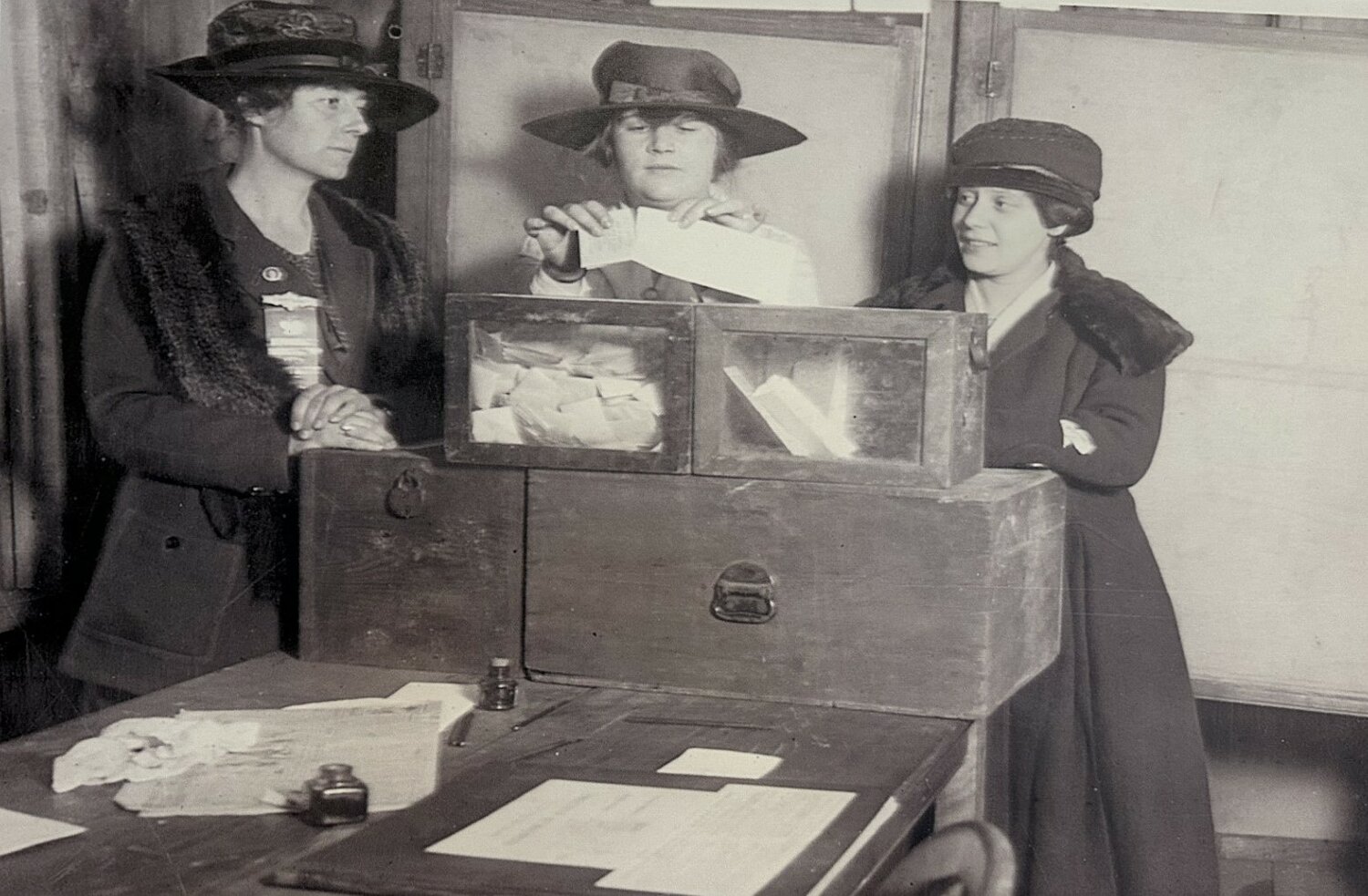


GREEN COVE SPRINGS—When Congress passed the 19th Amendment on June 4, 1919, and finally ratified it on Aug. 18, a year later, Florida wasn’t keen on giving women the right to vote.
But that wasn’t true in Clay County, especially Green Cove Springs.
The State of Florida waited until May 13, 1969, to grant women the right to vote. By then, Black and white women had already voted in Green Cove Springs for 49 years.
“Florida didn’t want to ratify it because they didn’t want Black women to vote,” Archives Specialist Vishi Garig said. “But here in Clay, they allowed it. Black and white women have always been allowed to vote.”
Although several women in Orlando and Winter Park voted in springtime elections in 1919, Wikipedia lists Helen Hunt West as the first woman to register to vote under equal franchise rules on Sept. 7, 1920, in Oakland, Florida, about 20 miles west of Orlando.
However, according to official voter registration records at the Clay County Archives office, 365 women registered to vote in Precinct 1—Green Cove Springs before Oct. 1, 1920, and most of them voted a month later.
Part of the process included listing their professions, and there were 24, including seamstresses, farmers, hotelkeepers, poultry raisers, dressmakers, milliners (hatmakers) and midwives.
Also, Black men were voting in Green Cove Springs as far back as 1858, when citizens of the Black Creek district became independent of Duval County. John G. Smith was the district representative. He took a petition to Tallahassee and filed a bill with the state House of Representatives on Nov. 26, 1858, and left four days later.
The House passed the bill 26-0, and the Senate approved the application on Dec. 17, 35-0. Governor Madison Perry signed the bill on Dec. 31, 1858, which created Clay County.
Men, Black and white, have been voting in the county since.
Men and women of all races can cast early voting ballots starting Oct. 22 for the upcoming General Election. Polls will be open for anyone registered on or before Oct. 7 from 7 a.m. to 7 p.m. through Nov. 2 at seven sites.
Women struggled to earn the right to vote for more than 60 years after that in Florida.
Susan B. Anthony was arrested in 1872 for violating the Enforcement Act of 1870 by casting a ballot in the presidential election between Ulysses S. Grant and Horace Greeley. The Judge ordered the jury to find her guilty, and he ordered her to pay a fine but refused to put her in jail.
Women didn’t win the right to vote nationally until 1920. Although Lydia Taft, a wealthy widow, voted in Uxbridge, Massachusetts, town meetings in 1756, no other women were allowed to vote until Wyoming granted the right as far back as 1869. The first state in the South to allow women to cast a vote was Louisiana in 1918.
Women played a significant role in World War I, and many countries, including the United States, recognized their contributions by granting them the right to vote in 1920.
